Poems, Slightly Used
The poems are presented in the order they were written. New work will be added to the bottom as it�s posted in my blog.
� William Michaelian, Salem, Oregon, October 2008
Spring Haiku
The earth rolls over
in her sleep � an old woman
whose breath is still sweet.
Original Entry
Spring Haiku, Poem 2
Snow on the lilac �
my mother has already
forgotten that day.
Original Entry
Spring Haiku, Poem 3
The cat ate a bird
but left behind these feathers,
raised by the cool wind.
Original Entry
I Find Him Eating Butterflies
I find him eating butterflies. They�re beautiful, he says.
If I eat enough of them, I�ll be beautiful too.
He stuffs a monarch in his mouth,
fuzz clinging to his lips.
I hear the flowers weep.
He begins to eat them too,
stray petals on his shoes.
A hummingbird arrives �
dips her bill into his eye,
takes a long, melancholy drink.
What to think � is he crazy,
or is he wise? Does beauty mind? Should I?
Original Entry
The Poet�s Glasses
Washed, dried,
returned to their place
halfway down his nose �
to find bright flowers
blooming madly
in the sink.
Original Entry
In the half-lit damp I see a face
In the half-lit damp I see a face �
that which remains after storm and smoke
have passed its way, then drifted on.
What becomes a man,
are the little things he does;
what defines him,
is all he loves.
In the half-lit damp I see a face �
so much older than it was,
an archeology of thoughts and dreams.
Beyond my touch, it records
the evening cry of birds,
the scent of dusk,
the beating of wings.
Original Entry
Little Girl, Blunt Trauma
A little girl, blunt trauma
to the head. We handle her
as tenderly as we can.
Take pictures of what her
father did. Assemble evidence.
Put her in again. Zip up the body bag.
Go home to kids, who for all the world
look like flowers about to bloom.
And later, sleepless,
beg outside their rooms.
For an old friend who works in Radiology.
Original Entry
Taking Care of My Mother
Early morning. She�s sound asleep.
Passing through the quiet house,
I pause, extend my arms �
To stretch, I think � and then,
Suddenly, I�m lifted by the breeze.
Far below, the vineyard rows of home.
Now I walk the valley ground,
Inhale the scent of earth and weeds,
Stop � look up at what I was �
A bird, alone, circling.
Original Entry
A Mansion on the Hill
Your knowledge
is a mansion on the hill;
my hut has a hole in its roof;
could it be the things I see at night
are things you never will?
Original Entry
An Absurdist Play
The stage isn�t really a stage;
but then again the sky isn�t the sky either,
unless there happens to be a light rain falling,
dripping from a pine or from the edge
of a tall gray building.
Dawn, or at least a suggestion of it.
Reminder: Talk to the person who handles the lighting.
The cast consists of two characters,
who for the entire play alternate between
looking skyward and exchanging helpless glances;
their expressions might indicate the end of the world,
or perhaps the arrival of a space ship,
or, if they happen to be farmers,
concern over the weather.
Note: The actors are to have complete latitude in what,
if anything, their expressions indicate, the type and number
of emotions they wish to convey or feel helpless to prevent;
also, the play can be of any length; it can take a lifetime,
if necessary.
Periodically, someone sleeping in the next room
is awakened by the sound of people laughing;
he looks up and sees how early in the day it is;
the audience is also with him in the room;
poor souls � they would be free to leave,
if there were any exits.
Curtain.
Original Entry
The Trick
The trick, one poet said to another,
is to make your long lines seem short
and your short lines seem long �
then, let your words echo like freight cars.
That�s no trick, the other poet replied,
it�s just plain common sense.
The talk that followed
was drowned out
by the sound
of a passing train,
thank God.
Original Entry
Where Poems Come From
My mother, in the hallway, up early from a dream,
asking, �Am I supposed to go home today?�
And then the next night, calling out, �Are you there?�
followed by my dead father�s name.
Original Entry
Gray
I love this time of year,
how she marvels at the fall colors,
and then colors her hair.
�Must you always be so . . . gray?�
Yes, I must. The artist who painted me
was melancholy, and used only gray;
go ahead � take my picture.
�My god, you are gray!�
I gave her a leaf. It had turned gray in my hand;
but it was a lovely gray � a gray with veins,
a gray of ten thousand subtle shades,
a gray inside gray still becoming gray,
a deep gray well in which gray voices
echoed the glad gray eternity of our names.
�Not to mention crazy.�
Original Entry
Crickets
How strange this silence
would seem without
these crickets
here to explain.
Original Entry
A Dramatic Interlude
�Silly, you aren�t supposed to eat the flower, you�re supposed to wear it.�
All his life, it seemed, he�d been looking for the right buttonhole. There were thousands from which to choose, a staggering number of sizes and designs, and yet not one of them felt exactly right, and so he finally decided that he�d much rather eat the flower than put it in the wrong one.
�Oh, well. Come on. We�ll be late.�
Soon after they arrived, they were in the lobby when he heard a woman whisper to her, �He looks cute with those petals on his coat.� And she laughed and said, �Yes, he�s my very own flower child. I don�t know why he carries on so. But I love him. I really do.�
Later, after they were seated and the play had begun, he was surprised to find that the main character was a man who was obsessed with eating flowers. But he was surprised when he heard the audience laughing. And so without warning, he stood up, stepped past the people in the seats between his and the aisle, and followed the aisle down to the stage. Then, without hesitation, he went onto the stage and embraced the man, scattering petals everywhere. The audience erupted with applause.
In the newspaper the following morning, there was a picture of him on the stage, looking up with a puzzled smile.
�My hero,� she said � and her kiss reminded him of crushed marigolds � �that was your best performance ever.�
Original Entry
Afternoon Nap
Even in his sleep,
our little grandson
is imagining
the world.
Original Entry
Endgame
They were smart. They had their emotions printed on little cards. She handed him one to express her doubt. He handed her one to indicate his surprise, then quickly followed it with his standard disappointment card. She read them both and was about to reply with her �Are you really that blind?� card when she decided to break with form and speak instead. When she did speak, he was so shocked by the sound of her voice that he fumbled madly amongst his cards, sifted through them, turned some of them over, and dropped others. Finally, he found the card he was looking for: his �hurt and bewildered� card. He held it out to her, but she refused to take it. And again she spoke: �I�m so tired of these cards. Can�t we just talk instead? Like normal people?� He immediately searched through his cards again � this time to no avail. He tried to move his lips, but his mouth was so dry that it felt like he�d been eating feathers. For a desperate moment, he even wondered if he should have feather cards printed. But that feather-feeling � did it really count as an emotion?
Original Entry
Tenderness
From space
the earth a fishbowl
eager mouths
against the glass
a curiosity
at best
�They look so sad,� she said, �I�ll take it.�
Original Entry
Morning Notes: Three Short Poems
Come, let us sit
beside the fire
and find out
who we really are.
* * *
The sheet I used to protect
my mother�s jade plant
from the frost
now smells like
the still autumn night.
* * *
Before my bath
I set out clean clothes �
gently, now, as if
buttons are
eyes.
Original Entry
Pappy
At one end of a long haul,
his truck is parked
on a Fresno side street
outside an old Basque hotel.
�Leave it. A city needs its monuments.�
For an old friend, whose father has died.
Original Entry
Your Letter
At last, your letter has arrived �
in the form of a butterfly.
Isn�t that just like you?
And now, everywhere I go,
I hear children say,
�Look � that man is whispering in color.�
Original Entry
Fire
For Vassilis Zambaras
When I was very young
I thought, why not try
rubbing two words together?
Original Entry
Maps
One held up a leaf,
the other his bare white hand.
�The asylum is that way,
friends.�
Original Entry
The Early Years
Use this word in a sentence, the teacher said, and I was incredibly torn, because I loved to write but hated being told what to do � yes, even
then � and yet I felt it my sacred duty to give the word a good home, to give it a place of honor on the rough blank gray sheet of paper, and so I began to write, and after writing for what felt like the whole joyous first day of summer vacation, I looked up and the teacher was standing beside another student�s desk saying That�s very good in a fraudulent meaningless tone, That�s very good in a way that proved I knew her better than she knew herself, That�s very good with no clue as to how or why � and then it was my turn, and before she could speak I said That�s very good, and was immediately sent to the principal�s office, a man with hair on his fingers who said That�s very bad in the same fraudulent meaningless tone, and I wondered if he and the teacher were married, and what words they used in sentences when they were home and their tasteless supper was cold, and if they ever, ever listened to themselves.
Original Entry
Lara�s Theme
My mother, Laura,
listening, frowning,
no longer recalls
that tune.
�I should, I know.�
Original Entry
The Art of Loneliness
Serious
practitioners
know how
to make
it new.
Original Entry
Now and Then
In our old public library, a patron died reading in her chair. I was there. As gently as she could, the librarian removed the book from the widow�s hand, closed it, and set it on the table. Then she wrote a number on her cooling palm, nodded for my help, and together we shelved her in the reference section. She�s been there ever since. And when I hunger for the knowledge she possessed, I carefully take her down � a volume mute, but never dumb, her faded skirt and blouse, her rigid spine, her yellowed teeth and bones.
Original Entry
Jung and Easily Freudened
Specimen 1
The patient didn�t know
he was the patient
the doctor didn�t know
he was the doctor
I didn�t know
either of them
so I turned away
from the mirror �
yes I said I turned away,
turned away from the mirror.
Specimen 2
Imagine an ordinary pincushion full of pins, and that this pincushion has been left undisturbed for quite some time, and that microscopic beings of great intelligence have built an advanced harmonious civilization among the pins, and that an old woman on her way through the room happens to notice the pincushion and decides for a vague sentimental reason that she needs a pin, and that with her thumb and index finger she destroys the civilization�s archives, killing the director and his leading scholars, and also topples several buildings, trapping thousands of microscopic beings in silent transparent elevators while ruining a major portion of their solar-powered transportation system, causing also a cataclysmic dust storm, and that one brave, intrepid member of this microscopic race manages to record the entire event though it brings about his own death, and that the few surviving beings flee to a wool cap hanging on a doorknob several light years from the pincushion. Then imagine hearing the woman say, �My goodness. What on earth did I come in here for?�
Original Entry
Foiled Again
The murder of the imagination was seen as great progress. �Now,� they said, �if we could just do something about these children � you know, nip it in the bud.� But then, before anything was decided, the bud grew, and it opened, and its cloud-sized petals nearly smothered them all. It was a symphony, out on the town. �We�ve failed somehow.� And there was laughter from one mountaintop to another, and the rattling of tin cans tied to the bumper of an old Cadillac � not another wedding! The driver had plans of his own. �Call me on Tuesday.� Tuesday arrived: a card shoved under the door. �The baby�s eating something he shouldn�t.� An �clair? A worm? �No, far worse. Sorry, sir. We�ll pay for your leg.� The imagination: ah! � what a curse.
Original Entry
In Confidence
The same dream
over and over
a crazy woman
giving me a candle
then one night
I realize
I�m not dreaming
it�s the crazy woman
who�s dreaming
and she�s given me
her last candle
and she says now
what will I do
will you help me
and then she turns
into a candle
and that explains
these burns
on my face
on my hands
on my arms
Original Entry
Mind Over Matter
If each sense is a window,
what about those birds
singing madly in the attic?
Original Entry
Pitchfork Poem
About halfway through a ream of paper,
a perfect page of overlapping impressions
shows the poet�s vigor and control,
a braille constellation many
stars beyond its time,
distance bound
by restless
minds.
Original Entry
It�s a Wonderful Life
By the time he�d analyzed his feelings for her, they were gone, and so was she. The distance between the bridge and the water that morning was particularly tempting: he passed through it on his way to better understanding. A police diver fished him out. She identified him at the morgue. Remembered their last night together. Their last dull argument. A short time later, in their apartment, she found a note in his handwriting on the kitchen counter. It said, �Are we out of eggs?� She thought a moment, then turned it over and wrote out this response: �Why don�t you stay home today?� He looked up from his newspaper. �I was thinking the same thing,� he said. �I�ll call the office, then I�ll get out of these wet clothes and mop the floor.� Soon, she heard him call out from down the hall: �Elizabeth? This is amazing. Did you know we have children?�
Original Entry
Zen the Hard Way: A Drama in One Act
Master, I have swept
last night�s snow from the step.
It is now safe for you
to pass.
And the snow in the road?
Will you sweep that as well?
Rises. Starts toward door.
Master! Surely, you are not going out.
Oh? It seems you�ve given me little choice.
Our coats. We�ve a rough journey ahead.
I only meant ...
I know what you meant.
Hence, our journey.
And if we should die along the way?
If? Is that not the reason for our going?
Well, I, for one ...
You, for one � such impertinence
from a tiny snowflake! Can you imagine
what would happen if all the snowflakes
rebelled?
Yes. A blizzard.
Here is your coat, then.
Opens door.
Brrr! I�ve reconsidered. I�m old, not crazy.
But what of our journey?
Patience, my son. You see,
at least we�ve made a beginning.
Resumes his seat. Falls asleep.
Student also sits, begins writing in journal.
�Today, I tricked him again.�
Looks up, smiles, unaware he is melting.
Original Entry
Triptych: For a Melting Snowman
To his right
the deaf
the blind
to his left
and Christ with
a lamb in his arms.
We regret to inform you that your son
To his right
the dead
blind
to the red
letter edition.
To his right
the dread
left
unsaid
Christ with
a pained expression.
And there appeared a bright star
To his right
The shepherds kept their watch
To his left
And Billy and Tommy and Prissy and Jen
could not put
poor Jesus
together again.
Original Entry
At the Poem Museum
The other day, I went to the poem museum. There were poems of all colors, shapes, and sizes. Some were made of words and others were physical objects, or word-extensions that very closely resembled physical objects � I couldn�t always tell.
One that I really liked was a small piece of wood that had been carved into the shape of a poem. The sign beneath it said, �Poems of this type were often used in ancient rituals.� I tried hard to imagine a ritual that would require the use of a wooden poem. Had I been able to touch it and hold it in my hands, I might have had better luck. But at the bottom of the sign it said, �Do not touch.�
In the next room, I saw a clay figure of a man sitting beside a fire under the stars. I couldn�t see the fire or the stars, but I knew they were there because of the way the man was sitting. I thought it was a very nice poem indeed.
Awhile later, I overheard two people talking about language. �That doesn�t prove anything,� one of them said. They were standing in front of a very large, beautifully wrought word-poem, arguing. After they had moved on, a custodian quietly swept their argument into his dustpan.
For a brief time, a poem that looked exactly like a fly buzzed around me.
Another display was called �Common Poems for the Common Man.� It was a real live family sitting around a table, eating soup and bread. But I must have gotten a little too close, because their dog bit me. Very effective.
Original Entry
Sorry I Missed You
Sorry I missed you. I had disguised myself as a spoon and was in the silverware drawer. Had you opened the drawer instead of calling my name ... but, of course, how were you to know.
It reminds me of the time you were a piano. Do you remember? If you hadn�t been ticklish that day, and if I hadn�t been a piece of sheet music ... well, I think we were both surprised when we found out the burglar was a musician.
Original Entry
Saving Grace
Today it�s the rain,
and the way it finishes
every sentence.
Original Entry
Postscript
I was quite happy being a cloud, until one day in the post office I heard someone in line tell her friend that she wished she was a cloud, because clouds were never homesick. Then and there, I became a bundle of letters.
�Look at him,� she said. �Pretending he�s not a cloud.�
Original Entry
Withdrawn
After looking at both sides, he realized the situation was not a flat object. This reminded him that flat objects, even those which were extremely thin, had more than two sides. A sheet of typing paper, for instance, had six, its four edges actually being very narrow sides. One would have a difficult time indeed if he were to try to write a poem or novel on a surface that narrow � although, to be fair, he knew it was possible to write legibly on the edges of the pages of a closed book or ream of paper. Then, if the sheets were examined individually, one could detect a tiny portion of the message on each. In a way, it was like studying a sedimentary record to understand what had happened over time in a given place. To test his theory, he picked up a used book of his that had been discarded by the public library, and then ...
�Are you even listening to me?�
Original Entry
Stream of Consciousness
He didn�t expect the bubbles to look like eyes, or to feel his heart breaking when one he�d been watching as it drifted along burst as it was passing over a rock. Neither did he expect the rock to care, or even notice, but it did, and in a colossal effort it dragged itself out of the water and died on the bank. In anguish, the entire current went rushing into the hole where the rock had been and disappeared. As the sandy bed beyond dried in the afternoon sun, there arose a great cry: �I�m blind, I�m blind, I�m blind ... �
Original Entry
Melody
Words are living things. Sometimes, through ignorance and arrogance, we murder them, or treat them as if they were already dead. I was at a word funeral once. The casket was a meadow. The pall bearers were clouds. Most of us in attendance were writers in some frail dimension: poets, novelists, critics, storytellers, biographers. What pale expressions we wore! � thus bearing evidence of our guilt. The funeral lasted all day. Night fell. The stars looked on. Someone lit a candle. Soon we were all given candles to hold, and, singing, we followed the casket into the unknown.
Original Entry
A Perfect World
There are several buttons on my keyboard that I�ve never pressed. They have funny little symbols on them. I don�t know what they mean. Is it possible I need them and don�t realize it?
My keyboard is black. I like black. The buttons I don�t use are silver. I like silver, but not as much as black. I like to think black and I have an understanding.
I can imagine walking on a sidewalk alongside a busy street, holding my keyboard and pretending it�s a baby or an accordion. I�m not unhappy, but I�m wearing a melancholy expression.
I can imagine my keyboard trying to tell me something. �I didn�t sleep a wink,� for instance. Or, �Put me down at the corner, I need some time alone.�
A policeman asks, �Why are you talking to that keyboard, son?� I explain that we are friends, and that we are on our way to the library. �In a perfect world,� he says, �I would believe you.�
�In a perfect world, you would believe everything,� I reply. He doesn�t hear me. I reach into my pocket and hand him my very last rainbow. He thinks it�s a stick of gum.
Original Entry
Premise
Sometimes I feel like a character lurking in the shadows in the artwork for the cover of a book. My back is turned. Only the artist knows what I look like and the disturbed expression on my face � facts he discovered while making a preliminary sketch. Created against my will, I am the book�s resentful and self-resenting subject � the bedeviled Everyman, the Nowhere Man, the Man Who Would If He Could Be Any Man. I drink and I think, both to excess. I�m paralyzed by the certainty of a meaningless future. The past is the sound of my own footsteps, leading away. They end in silence. I dwell in that silence until a letter arrives. But instead of reading the letter, I place the sealed envelope on the table before me. It sits there for a year. Two years. Ten. Other letters arrive. Like the first, they are crisp and white and hopeful for a time. Eventually, though, they learn, as I have, that there is no real reason for them to be read. Curiosity is insufficient. Their messages will change nothing. Someone has died, someone has been born, someone has found a new job, someone is expecting visitors and wants to know if perhaps I might want to join them, for it�s so wonderful this time of year and we miss seeing you, when the truth is they�re glad I�m away, glad because I scare the children, glad because I stay up at night and walk about the rooms, glad because I�m self-sufficient in ways they can never understand, glad, yes, but they do love me, there�s no getting around that, and the only way they know of proving it is by pretending they want to see me � and so their letters gather dust on my table, in a perfect, silent symphony.
�I have other sketches. Would you like to see them?�
�Yes. I would.�
�This one is brighter.�
�Uh-huh.�
�In this one you can see his face.�
�My God.�
Original Entry
Encore
My son, asleep on the couch at dawn,
guitar in lap and arms, cat with eyes upon him,
sweet pause � sound of a mourning dove.
Original Entry
Hard Times
That buzzard waiting on the fencepost
looks like he knows my name.
Very well. Two can play this game.
Original Entry
Harbinger
One stray crocus, raised like a prophet�s fist.
Original Entry
Winter Trees
Feline huntress, dozing on the grass.
Along the fence, a cort�ge of wary sparrows,
each dark face a funeral card.
On my lips, imagined bird names:
Shwittl, Tikipap, Pikit ...
farewell, farewell
winter trees.
Original Entry
Wash Day
Deep inside my pocket, wild chamomile and a prairie sunset.
Original Entry
Like a Flower
I was trying to think like a flower
when she found me
and shivered so
Original Entry
Genesis Notes
Two rocks of different geological backgrounds fall in love. Their parents disapprove, but they marry anyway. Their children are beautiful and strange. A man sees them and says, �I will use these to build a house.� The house is also beautiful and strange. Every night, the man and his wife hear voices. Finally, they go mad. Many thousands of years later, the entire mountainside is mad with strange, beautiful rocks. �Ah,� God says. �I see someone�s been here before me.�
Original Entry
Sea Change
Note to self: the next time
a fish swims by
when you
look outside,
don�t open the window.
Original Entry
Frame
Bare maples
thrashed by wind,
restless crows roll
smokes behind
the potting
shed.
Original Entry
Wings
Butterfly, why was I given this stone tablet, chisel, and hammer?
Original Entry
As Marrow
Language as marrow, words as blood and bone, nerves as rail lines tuned to wires� hum and worn out shoes, no stranger but myself, moving on.
Original Entry
Haiku Shoes
Sprouting irises � someone�s muddy footprints led me here.
Original Entry
Autopsy
Here it is � dawn, unfolding like a flower.
Original Entry
Let Him Down
Poor kid, he died in Paris,
a stranger to the dives and alleys
of his own hometown.
Look twice,
then let him down,
let him down.
The homeless didn�t know him
like they should
let him down
or the policemen
making rounds
let him down
or the spooks
on Front Street
let him down.
Let him down,
go ahead,
let him down.
I�ll tell his mom when I get home,
if she�s around.
I heard this song at an imagined funeral. It was sung by a young man seated on a stone and wearing a wide black hat. After he was done, he stood up and slid his guitar onto his back in one easy motion, so that the neck was pointing down. From the front you could see the thin black strap. Then he walked away. It was a cloudy day. No one said his name. I guess they didn�t know it. I followed him to the curb. He almost smiled. Then, reassured, he looked right through me.
Original Entry
The Right Ward
In its advanced stages, the need to be right is a paralyzing illness. That, my friends, is why we are here: to see if there is not some cure; to see how wrong we can be, not only about these poor souls, but about everything we see, and to feel that wrongness in our bones, and in the very thoughts we breathe.
Original Entry
Duluth
The ache of a new song,
before the notes are tried
the hope in a cheap room,
before the paint is dry
the needing otherwise
of able, dirty hands
between drinks and rides
in this wide�n empty land
t�Duluth and other times,
as if they�ve never been
Duluth and other times,
as if they�ve never been.
Original Entry
After Her Walk
After her walk, I find a sprig of plum,
drinking from a baby food jar.
Original Entry
Depot
Alone is a precipice, and Greyhound is a sad and funny word.
Original Entry
Between Rides
Coins, arguing in his pocket. �Just keep walking,� he thought.
Original Entry
Mission
A cigarette with a stranger is like a name between friends.
Original Entry
Dream
The rain burned his hand. �Love,� he said, upon waking.
Original Entry
Go Back and Say Yes
Go back and say yes
and then wait
no
Go back and say yes
and then wait
no
Go back and say yes
go back and say yes
or don�t
go back
at all
Original Entry
Great-grandpa Lars
If I had a hat with a wide black brim, I�d remind myself of him.
Original Entry
Long Time to Know
It took him a long time to know
that was a lullaby those trees were singing
but by then the bells were ringing
and they said �Time for him to go!�
And the hearse at the curb
was the blackest thing he�d ever seen
even though those eyes of his
were closed
those eyes of his
were closed.
Original Entry
Dry Haiku
Tarantula on a dead man�s face � hard times on Highway 61.
Original Entry
What They Said About Light
Early each morning, the people quietly arose,
then emerged from their cottages
with their pitchers to fill them with light.
It was wonderful to see them
gathered at the well �
mothers first with their children,
each child with a pitcher of its own,
infants with tiny thimbles
old men trembling to keep hold,
farmers, midwives, poets.
There was a wise saying in those days:
First, let us bring light.
Then someone came along
and broke all the pitchers.
But in time they found other ways
to bring light �
in their eyes, in their hearts, in their hands;
in their minds.
And so their saying is right;
what they said about light, still stands.
Original Entry
Copper Rain
Trick of the light, or a copper rain, ten thousand pennies at a time?
Original Entry
Outgrown
Bicycle inner tube in our dogwood tree � memory sheds its skin.
Original Entry
Calligrapher�s Note
Old woman on the sidewalk, flowers in one hand, cane in the other.
Original Entry
Did You Know?
A few words in a jar
will light the room at night
if you love them first
and say them
right.
Original Entry
Sunday�s Child
To be my mother�s lilac,
and for her to somehow know it
like its scent, a thought that
cannot last for long
Original Entry
Work Notes
Hummingbird
suspended
beneath
the eaves
flees into my memory
Original Entry
Orange Blossom Time
The scent was at its peak the day we laid my friend to rest.
At his graveside, near the end of the service,
he took a deep breath, then sighed.
Everyone was surprised.
The pastor smiled.
He said, �Orange blossom time.�
Original Entry
Pizzicato
What larger thing
in a smaller space
than that which
proclaims
the heart
Original Entry
Saved
Little girls
laughing
in the street
flowers
on the way
to Sunday school
Did you see my mother�s pretty hair?
Original Entry
Balancing Act
High upon my crooked ladder, cloud in one hand, sun in the other.
Original Entry
Memorial Day
Golden poppies snug around a fire hydrant � face in tire shop window.
Original Entry
Understandable
A mirror that one day wanders off and becomes a lake, just because.
Original Entry
Ruins
Dragonfly
prehistoric blue
these ants have made
of you a church
without
a bell.
Original Entry
Summer Advice
Kiss each other
in the shade
after you�ve
eaten
a juicy
ripe peach.
No shade,
imagine the tree.
No peach,
imagine the taste.
No one, no one
with a heart
out
of reach.
Original Entry
Haiku Window
�Good-bye, Daddy,�
and her father zooms away
in his little red car.
Original Entry
Portent
Thank you, brother crow,
for pruning my dogwood tree;
feather in my loom.
Original Entry
June Rain
Blown by the breeze, a raindrop landed on the bare foot of a child sitting in his mother�s lap on their porch. The boy laughed and pointed at his foot. His mother smiled. When a man walked by with his umbrella, their bright faces turned into flowers. Further along, the man stopped and became a tree. And so he remained, solemn and wise, until the end of that welcome June rain � the rain that changed everything.
Original Entry
Tinkling
In this early hour, our urinating guest sounds like a small wind chime.
Original Entry
Inland
Harbor mist
a gray that smells of fish
Dianthus blooming
by the steps.
Original Entry
Haiku June
With my very own eyes � a ripe strawberry picking a little girl.
Original Entry
Morning Detail
Ghostly scented rooms:
last night�s shower
has awakened
the grass-seed fields.
Original Entry
Pause
A sudden rain
has silenced
the crows;
by the back door,
my wife�s wet shoes.
Original Entry
Crowku
This morning the crows
are in an uproar; I switch
from blue ink to black.
Original Entry
High Tide
The sound of the freeway
is the surf,
the trucker�s brake
a spouting
whale.
Original Entry
July Rain
Dying is such old work � I settle the dust in our yard with a hose.
Original Entry
First Try
Old crow, you sound like
my father�s outboard motor �
ten horses, no tails.
Original Entry
Sitting At My Mother�s Desk
That pleasant, nagging feeling
that I should have changed by now �
or that I already have,
and will never
know.
Original Entry
First Impression
Up in time to find a dove confessing to a weightless sliver moon.
Original Entry
Front Walk
Instead of graves, why don�t we scatter like these geranium petals?
Original Entry
Red Light
Three little girls waiting at a corner,
one just old enough to worry.
Their mother pacing,
calling someone
anyone
with her cell phone.
Original Entry
August Sunrise
Overripe clouds
and a train
horn
a robin
motionless
in dry grass
Original Entry
August Sunrise, Two Days Later
The eastern sky a rose petal; behind it, someone holds up a match.
Original Entry
Front Window
Here�s a June morning
that got lost on its way to August,
the sky said,
as if it always explained
such things.
Original Entry
Oregon Express
To be a train on a morning like this,
hooting through wild blackberries.
Original Entry
Fairy Tale
And then one day he imagined he was real, and that was the best gift of all.
Original Entry
Gone
A streaking pair of doves
fans the street lamp
dead
gray on gray
after rain.
Original Entry
The Madman
Begging glass, selling little bottles
of sunlight � this old village
would not be the same without him.
The poplar is straight; twisted grows
the neighbor�s olive;
outside, the madman howls and howls.
Or is it the wind? The door slams;
I burn my hands,
then put the bottle back again.
Original Entry
Here and There
If I am here and you are there
(across the room or around the world)
where do our minds meet?
And if you are now and I am then, when?
I repeat: have you seen
my teddy bear?
(I thought I�d throw that in.)
And if the meeting is imagined,
all the better.
Or if it�s one cell harmonizing
with another in a larger brain we share,
that would hardly be unfair,
granted the illusion that we can,
and must, begin again.
Original Entry
Personal
Cursing at the kitchen window, I am shamed to grace by a rose.
Original Entry
Painting
Unperturbed by mismatched colors,
when I�m done this place above the stove
will be perfect for some kind
of colorful, crazy clock.
And so goes
the story of my life �
I hide one thing, only to reveal another.
Original Entry
Haiku for August
Can it be, the oldest part of me
is smoke from things
I cannot
see
Original Entry
Monday Morning Haiku
Lifeless thread in the laundry basket becomes a spider in my hand.
Original Entry
Regret
Heavy clouds
on a locomotive�s back
a cry at every
crossing.
Original Entry
Act 1
Clouds at dawn
and a street light sun
in just the right
place
between two
trees.
Original Entry
Covenant
Before they happen,
the sense of history in all things.
After, the sense of implausibility,
until it has all been imagined
again.
Original Entry
Proverb
I tear an apple from the bough,
as if now such sweet
vengeance is
mine.
Original Entry
Almanac
Light stain on the bathroom floor
made by a skylight moon
tentative
hand
Original Entry
Scavengers
Father and son,
streetlight shining
on upturned lids
of garbage
cans
...
mine adds nothing.
Original Entry
Destiny
After a long, tiring day, I spied a face in the bathroom wallpaper. It was near the shower, about a foot above the floor. Bushy eyebrows, arched, inquisitive; the blue-oily bead of an eye at least half insane, a mouth like an entrance to a cave. I had an idea: to take one square of toilet paper, press it to the wall, and trace the image. But the face didn�t show through. Very well. I returned with a piece of wax paper and a fine felt-tipped pen. To trace the image, I had to stretch out on the floor. I set to work. My hand was shaking ... the face refused to appear. I traced on. Clouds, perhaps? A doctor�s Rx? No, not even less. To salvage the image, I tried shading the brows. But black is not blue. I lifted the paper. The light fell through. I sat up, alone in the room.
Original Entry
Morning News
Neighbors chatting ... they leave for work, but their voices remain.
Original Entry
Fog
Outside, I�m a ghost. Inside,
I�m no less real � until I spend
an hour looking at my hands.
Original Entry
Gravity
After a lifetime of flight,
the star and the man stopped
and looked at each other,
then sped on.
Original Entry
Morning Side
To the kitchen, then,
for my second cup
the coffeemaker gasping
gently in the dark
the crickets
I heard
on last
night�s walk
the unnamed
rhythm of the stars.
Original Entry
Cracked
Struggling with a new, untamed mirror.
Not as I look, he explained. As I am.
Original Entry
Restless
A foolish assumption, that trees don�t dream.
No, and they don�t look like old men, either,
when the streetlights shine through them just so.
Lacy maple, big round sleepless eyes. An uncle�s
mustache low upon the ground. Blink twice,
now he�s gone. Night has rearranged the world.
Original Entry
Crawl Space
The scent of mold so appealing and intense,
I wonder if I�ve been dead before.
Original Entry
Late September Before Dawn
The Big Dipper, standing on end . . .
where the bottom star is nearest the ground,
I find it in a giant�s palm � lucky for me he�s sleeping.
I tickle his wrist . . . he loosens his grasp,
and I�m off with a constellation
of my own.
Original Entry
Ward 6
A faded poem aside its bed,
numb in its sunken chest;
its flesh and bones,
its breath, the wind.
Original Entry
After
Ah, the life of a dream when the images flee and the rhyme remains.
Original Entry
Longing
A singing tree
starlings
hidden by
golden
leaves
ripe nuts
out of reach
Original Entry
Autumn Detail
One last ladybug
cold upon
a leaf
about
to
fall
Original Entry
Child with a Lantern in a Dream
Now you can see, Mr. Sun,
that there is nothing
to be afraid
of.
Original Entry
Early Morning, After a Dream
First a train horn, mournful,
low, and long. Then the ghostly figure
of a child and his locomotive
beside me on the floor. Or
is it the other way
around?
Original Entry
After the War
In the ruins
beneath
the sun
beside
the column
across
the step
an ant
making
its way
home
Original Entry
Me
A house in which no room exists until I enter it,
and the ones I leave wither and fall away.
Original Entry
Birches
She laughs at the yellow leaf
tangled in her hair
then gives me
her hand
Original Entry
Yellow Fever
Fig leaves so bright, the birds don�t sleep at night.
Original Entry
Unearthed
Five stone steps between
two houses
a monument
to friends who have flown
Original Entry
Decision
On the sidewalk, among the leaves,
one winks up at me.
I will ask
her.
Original Entry
Perspective
The universe as pipe-smoke or shepherd-song.
Original Entry
Jealousy
Full moon
through
the blinds,
these lines
on my
wife�s face
will be
gone
by
morning.
Original Entry
The Fall and Rise of the Autumn Empire
For my grandson, Isaac
One year, when this fig tree
was small, your great-grandmother
picked the yellow leaves
before they could
fall.
Original Entry
Life
What better way to explain it, than this hailstone here in my palm?
Original Entry
Self-Portrait in White
A man and his donkey; a snowy field; a cart full of bones. The wind.
Original Entry
Autumn Fires
On the sidewalk after coffee,
my dead father appears long enough
to inhale the smoke rising from my friend�s
freshly lit cigarette. The three of us
smile, say nothing.
Original Entry
On this Autumn Afternoon
A birch tree shudders,
sighs,
�I have yellow leaves for eyes,�
just
as
I
pass.
Original Entry
Scene from a Recurring Childhood
Stick-horses snorting impatiently
by the school room door; the high Sierra;
the valley floor; dirt on my clothes
and hands; my father smiling,
walking this way.
Original Entry
Sunday Supper
It fits in my palm,
this grape leaf
with veins that lead
to my grandma�s house.
Original Entry
Death
An old man reading at a table,
a curious ghost standing beside him,
lighting the pages with a candle.
Original Entry
Late
Stars and streetlights
mingle at a night convention,
fall silent when I enter
the room.
Original Entry
Face to Face
Clear and cold. A cat on a fencepost, turned into an owl by the moon.
Original Entry
Cold Spell
Still dark, more coffee, restless as my mother�s wind chime.
Original Entry
Detail
peeling an orange
my father did it this way
with suicide hands
Original Entry
Haiku for December
On cold days like these,
even the sun envies
a poet�s cup
of tea.
Original Entry
Christmas Shopping
Little boy, each fart a triumph,
embarrassed
mother,
squeezing his hand.
Original Entry
The Day After Christmas
Like this chocolate
slowly melting, he thought,
sweet even after
it�s gone.
Original Entry
Storm
A sky so heavy, the trees and houses can no longer hold it up.
Original Entry
Resolved to Revolve
A calendar
shaped
like a roulette wheel,
red for day, black for night,
my last dollar down
on
3
6
5
.
Original Entry
Auld Lang Syne
I haven�t been this drunk
in a long time,
said the poet
to his dog
who had
died
years
ago.
But the story really begins when daylight licks his face.
Original Entry
POETRY COLLECTIONS IN PRINT
Available from Cosmopsis Books of San Francisco
Winter Poems
by William Michaelian
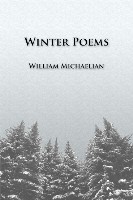
ISBN: 978-0-9796599-0-4
US $11.95; $8.95 at Cosmopsis Books
52 pages. 6x9. Paper.
Includes one drawing.
San Francisco, June 2007
Signed, numbered & illustrated copies
Winter Poems displays the skills and abilities of Mr. Michaelian at their most elemental level, at the bone. Wandering amidst a barren world, a world scraped bare, he plucks the full moon like fruit from the winter sky, goes mad and befriends a pack of hungry wolves, burns his poems to keep warm. He is a flake of snow, a frozen old man, a spider spinning winter webs. Spring is only a vague notion of a waiting vineyard, crocuses, and ten-thousand babies. The author is alone, musing, reflecting, at times participating. But not quite alone, for he brings the lucky reader along. I�ve been there, to this winter world, and I plan to go back.
� John Berbrich, Barbaric Yawp
Another Song I Know � Short Poems
by William Michaelian
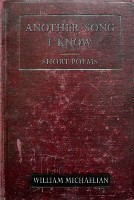
ISBN: 978-0-9796599-1-1
US $13.95; $10.95 at Cosmopsis Books
80 pages. 6x9. Paper.
Includes Author�s Note.
San Francisco, June 2007
Signed, numbered & illustrated copies
Another Song I Know is a delightful collection of brief, resilient poems. Reading them, one by one by one, is like taking a walk through our common everyday world and suddenly hearing what the poet hears: the leaves, a coffee cup, chairs � and yes, even people, singing their songs of wisdom, sweetness, and light.
� Tom Koontz, Barnwood poetry magazine
Also by William Michaelian
POETRY
Winter Poems
ISBN: 978-0-9796599-0-4
52 pages. Paper.
����������
Another Song I Know
ISBN: 978-0-9796599-1-1
80 pages. Paper.
����������
Cosmopsis Books
San Francisco
Signed copies available
Main Page
Author�s Note
Background
Notebook
A Listening Thing
Among the Living
No Time to Cut My Hair
One Hand Clapping
Songs and Letters
Collected Poems
Early Short Stories
Armenian Translations
Cosmopsis Print Editions
Interviews
News and Reviews
Highly Recommended
Let�s Eat
Favorite Books & Authors
Useless Information
Conversation
Flippantly Answered Questions
E-mail & Parting Thoughts
Poetry, Notes & Marginalia:
Recently Banned Literature